
Band A is £1,532.46 and Band H £4,597.38. Harlow Council froze its £288.90 share for a fifth year, so every penny of this year's £82.26 rise came from Essex.
A Band D council tax bill in Harlow is £2,298.69 this year, £82.26 more than last year. Not one penny of that increase was set by Harlow Council.
The council has frozen its own share at £288.90 for the fifth year running. The increase comes entirely from the other three bodies on the bill, and the arithmetic matches exactly: Essex County Council added £62.37, Essex Police £14.94 and Essex Fire £4.95, which is £82.26.
Harlow is one of the few districts in England where there are no parish or town council precepts either. The whole town is unparished, so there is one band table for every address in the district, and it is the one below.
Everything on this page was checked on 30 August 2026 against Harlow Council’s own pages and the budget documents of the four authorities that share the bill.
The full band table for 2026-27
Every property in Harlow falls in one of these bands. The valuation is what the property would have sold for on 1 April 1991, not what it is worth now.
| Band | Value at 1 April 1991 | 2026-27 charge | 2025-26 charge | Change |
|---|---|---|---|---|
| A | Up to £40,000 | £1,532.46 | £1,477.62 | +£54.84 |
| B | £40,001 to £52,000 | £1,787.87 | £1,723.89 | +£63.98 |
| C | £52,001 to £68,000 | £2,043.28 | £1,970.16 | +£73.12 |
| D | £68,001 to £88,000 | £2,298.69 | £2,216.43 | +£82.26 |
| E | £88,001 to £120,000 | £2,809.51 | £2,708.97 | +£100.54 |
| F | £120,001 to £160,000 | £3,320.33 | £3,201.51 | +£118.82 |
| G | £160,001 to £320,000 | £3,831.15 | £3,694.05 | +£137.10 |
| H | More than £320,000 | £4,597.38 | £4,432.86 | +£164.52 |
The bill rose 3.71 per cent across every band. Harlow’s housing stock is heavily weighted towards the lower bands, so Band A to C figures matter here more than they do in most districts.
Who gets what
The council publishes the split by band, which many districts do not. These are the four lines that add up to the total above.
| Band | Essex County Council | Harlow Council | Essex Police | Essex Fire | Total |
|---|---|---|---|---|---|
| A | £1,094.64 | £192.60 | £183.54 | £61.68 | £1,532.46 |
| B | £1,277.08 | £224.70 | £214.13 | £71.96 | £1,787.87 |
| C | £1,459.52 | £256.80 | £244.72 | £82.24 | £2,043.28 |
| D | £1,641.96 | £288.90 | £275.31 | £92.52 | £2,298.69 |
| E | £2,006.84 | £353.10 | £336.49 | £113.08 | £2,809.51 |
| F | £2,371.72 | £417.30 | £397.67 | £133.64 | £3,320.33 |
| G | £2,736.60 | £481.50 | £458.85 | £154.20 | £3,831.15 |
| H | £3,283.92 | £577.80 | £550.62 | £185.04 | £4,597.38 |
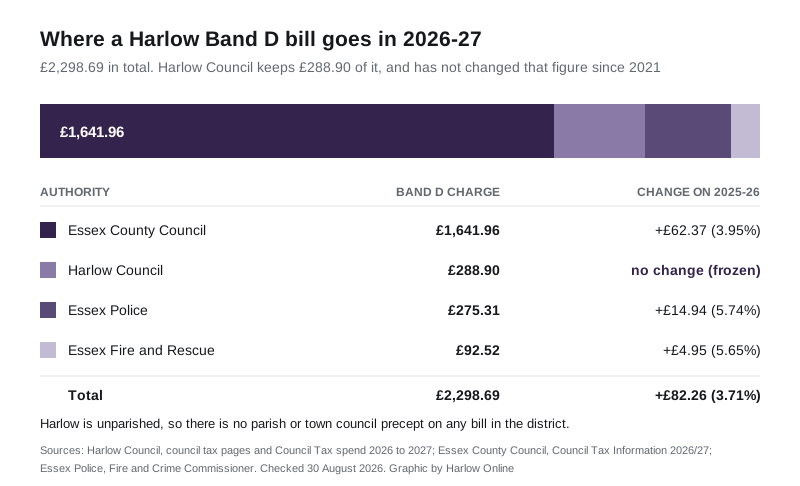
The council’s own summary of that split is that it keeps “around £13 out of every £100 of Council Tax collected”. Its published breakdown is £71 to Essex County Council, £13 to Harlow Council, £12 to Essex Police and £4 to Essex Fire.
What changed this year, and why
Three of the four authorities raised their precept for 2026-27.
- Essex County Council put its charge up 3.95 per cent, made up of a 1.95 per cent general increase and a 2 per cent adult social care precept. That takes Band D to £1,641.96, an increase of £1.20 a week. The government allowed up to 4.99 per cent. In its council tax leaflet the county says it limited the rise to “just 3.95%, one of the lowest proposed by any county council in the country”, while facing “new pressures of nearly £100m” and delivering £41 million of savings.
- Essex Police went up 5.74 per cent, or £14.94, to £275.31 at Band D.
- Essex County Fire and Rescue Service went up 5.65 per cent, or £4.95, to £92.52.
The police and fire precepts are both set by the Police, Fire and Crime Commissioner for Essex and were approved together by the Essex Police, Fire and Crime Panel. The Commissioner, Roger Hirst, said the government settlement was “insufficient to cover rising costs for both emergency services” for the second year running. Together the two rises come to £19.89 a year, or 38p a week at Band D.
- Harlow Council did not increase its share at all. Its Band D charge stays at £288.90, where it has been since 2021.
The council announced the freeze on 9 February 2026 and confirmed it in a record £350 million budget on 18 February. Council leader Dan Swords put it as “five years, five freezes”.
One detail worth pinning down. The council repeatedly says the average Harlow household pays “£4.93 a week” for its services. That is the Band C figure. Its own weekly table gives Band A as £3.70, Band D as £5.55 and Band H as £11.11. The claim is accurate for a Band C property, which is a fair description of an average Harlow home, but it is not the Band D number people usually compare between councils.
Where the money goes, and what the council is borrowing
Harlow Council’s own share is £8,569,415 this year, up from £8,464,000 last year, on a total collected across all four authorities of £68,184,249. The whole picture is in its one page Council Tax spend 2026 to 2027 statement, which is more revealing than the press releases.
Figures from that statement:
- Total cost of services rises from £118.9 million gross in 2025-26 to £133.8 million in 2026-27, including a Housing Revenue Account of £67.7 million.
- The budget requirement rises from £15.411 million to £16.081 million.
- It is balanced partly by a transfer from reserves of £10.269 million, against £1.217 million the year before.
- Interest payable rises from £1.176 million to £3.554 million, and the minimum revenue provision from £1.596 million to £2.341 million.
- Net borrowing stood at £297.2 million as at 31 March 2025, being £313.3 million of long and short term borrowing against £16.1 million of investments.
- Staffing rises from an average 339 full time equivalents to 363.
- The council’s resident population forecast rises from 97,500 to 101,500.
That borrowing is the mechanism behind the regeneration programme, and it grew again in August 2026 with £24 million of PWLB borrowing for Terminus House.
How to check and challenge your band
Your band is set by the Valuation Office Agency, not the council. Look it up on GOV.UK’s council tax band checker, which takes a postcode and lists every property on the street with its band.
If you think it is wrong, you challenge the VOA rather than Harlow Council, through GOV.UK’s challenge your band service. It is free. Companies that offer to do it for a share of any refund are doing something you can do yourself, and the government publishes a warning about council tax scams for exactly that reason.
Two things the council flags that people get wrong:
- An extension or conservatory does not change your band immediately. It only triggers a revaluation when the property is next sold.
- You keep paying while a challenge or a discount application is outstanding. The council is explicit: pay the amount on the bill until you hear otherwise.
Discounts, and the premiums that have just got steeper
The standard reductions apply in Harlow:
- Single person discount, 25 per cent, if you are the only adult in the property. Children count as adults at 18, so a single parent living with an adult child is unlikely to qualify. Tell the council within 21 days if you stop qualifying, or you may be fined.
- Students, apprentices and carers can be disregarded entirely when the council counts the adults in a household.
- Disability reduction, where a property has been adapted for a disabled resident.
- Care leavers up to 21 get a discretionary reduction that leaves the household paying what it would have paid if the care leaver were not counted as an adult. You do not apply; Essex County Council tells Harlow directly.
- Empty and unfurnished, 100 per cent off for up to three months. The discount attaches to the property, not the owner, so if the previous occupier used part of it you only get the remainder. To claim it a second time the property has to have been lived in for more than six weeks in between.
- Major repair works, 50 per cent for up to 12 months, where the property is uninhabitable. Refurbishment does not count.
The premiums on top of a full bill are where Harlow has moved this year:
| Situation | Charge |
|---|---|
| Furnished second home | Full bill plus 100 per cent |
| Second home needed for work, such as a caretaker living on site | 50 per cent discount |
| Empty and unfurnished for 1 year | Full bill plus 100 per cent |
| Empty and unfurnished for 5 years, from 1 April 2026 | Full bill plus 200 per cent |
| Empty and unfurnished for 10 years, from 1 April 2026 | Full bill plus 300 per cent |
The five and ten year premiums are new for this financial year. At Band D, a house empty for a decade now costs £9,194.76 a year. Government exceptions to the premiums exist, and the council sets them out in its empty and second homes premiums policy.
Help if you cannot pay
Council Tax Support is the main scheme. Harlow’s published Council Tax Reduction Scheme for 2026-27 sets the maximum award for a working age applicant at 76 per cent of the bill, at section 57. Pension age applicants are on the national scheme and can have the whole bill covered. Capital above £16,000 rules you out, and above £6,000 for a working age applicant it starts to count against you.
The council said in January 2025 that it had agreed a new income banded scheme for working age applicants, to take effect before April 2026. The scheme document it has published for 2026-27 is still the existing means tested one with the 76 per cent cap, so treat the 76 per cent as the figure that applies now.
When it last published numbers, in January 2024, the scheme was supporting 2,140 pension age and 4,076 working age households at a cost of over £6.5 million. The council estimated in 2025 that the redesigned scheme would cost closer to £7.2 million, of which £4.4 million would go to working age households.
If you already get Council Tax Support and still cannot pay, there is a second tier. An Exceptional Hardship Payment is short term help, conditional on working with the council to improve the position, and applied for online or on a paper form from the Civic Centre.
What happens to all this after reorganisation
Nothing. The plan to fold Harlow into a West Essex unitary authority was withdrawn by the government on 7 September 2026, after a judicial review brought by Essex County Council. Harlow Council had committed £250,000, half its reorganisation reserve, to take part in that case as an interested party.
The practical point for a bill payer is that the £288.90 line, and the freeze behind it, belongs to a council that is staying. A wider review of reorganisation is still running and has no reporting date, so a different structure could be proposed later.
Updated 12 September 2026: this section previously said Harlow Council was fighting a plan to merge it into West Essex. That decision was withdrawn on 7 September 2026.
Related pages
- Harlow bin collection days, one of the services that £288.90 buys
- Parking in Harlow
- Harlow roadworks and travel
- Harlow house prices
Sources
- Harlow Council, council tax bands and charges, where your council tax goes, previous years’ bands and charges (pdf) and Council Tax spend 2026 to 2027 (pdf)
- Harlow Council, discounts and exemptions, single person discount, unfurnished properties, second homes, properties undergoing major works, care leavers, Council Tax Support and Exceptional Hardship Payments
- Harlow Council, Council Tax Reduction Scheme 2026 to 2027 (pdf), section 57
- Harlow Council news, Council Tax freeze for a fifth year, record £350 million budget, new Council Tax Reduction scheme approved and Council Tax support to continue
- Essex County Council, Council Tax Information 2026/27 (pdf)
- Essex Police, Fire and Crime Commissioner, 2026/27 budgets approved by panel
- GOV.UK, check your council tax band and challenge your council tax band
Have your say